Rajasthani vs Arabic Mehndi: Choosing Your Bridal Story
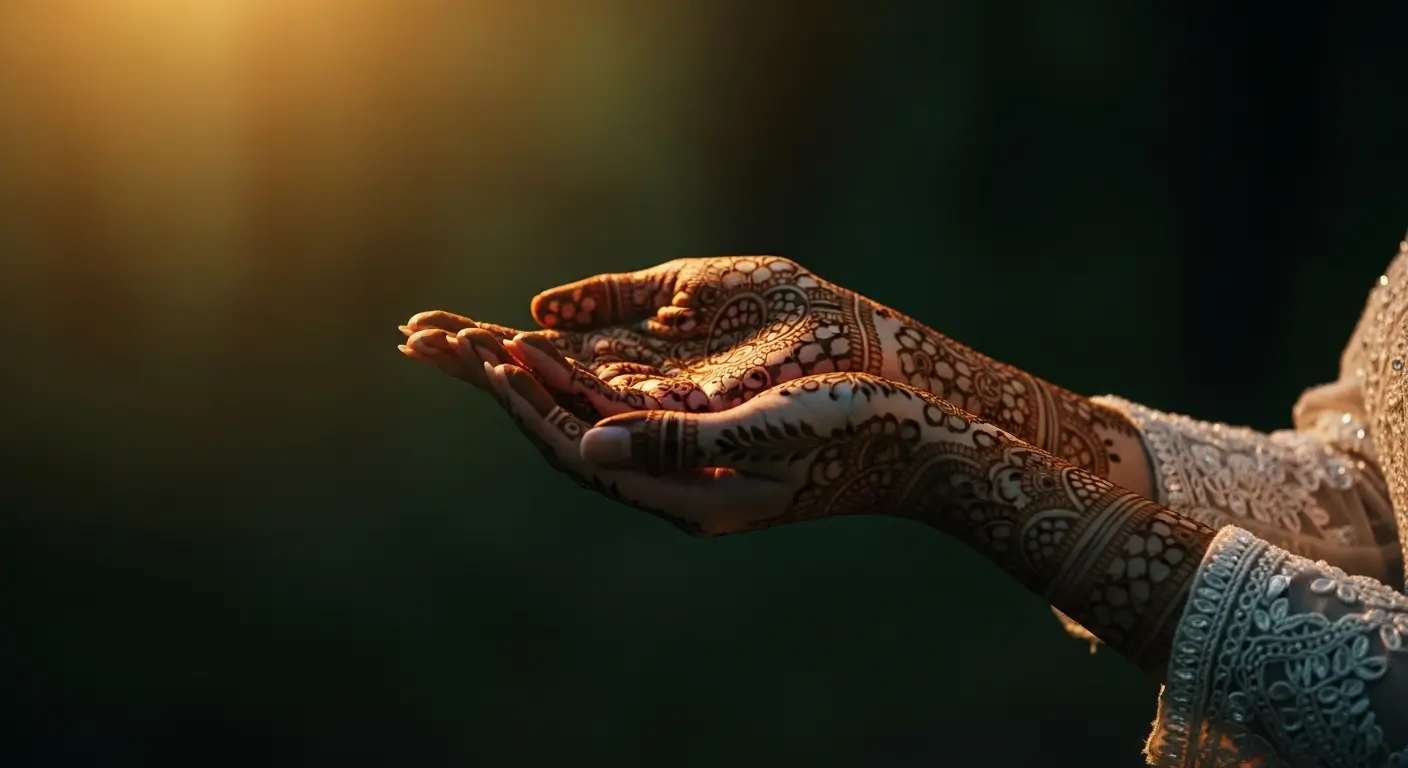
Every bride who walks into our atelier carries a story she wants painted on her skin. The first decision — and often the most quietly profound — is choosing between the two great schools that define bridal henna today: the dense, narrative-rich Rajasthani tradition and the bold, breathing Arabic style.
The Rajasthani Voice
Rajasthani mehndi is closer to embroidery than to drawing. It fills the entire palm and forearm with portraiture — the bride and groom, the baraat procession, palaces, peacocks, dholis — woven together by jaali (lattice), kairi (paisley) and tiny bel (vine) patterns.
Choose Rajasthani if your wedding leans heavily traditional, if you want a clear narrative on your hands, or if your photographer plans intimate close-ups of the mehndi ceremony itself.
The Arabic Voice
Arabic mehndi is bolder, more graphic, and uses negative space as an active design element. Floral vines drift diagonally from fingertip to wrist; bare skin is part of the composition.
Choose Arabic if your aesthetic is editorial, if your outfit is heavily embellished and you want the mehndi to whisper rather than shout, or if you want a design that ages beautifully on camera over a multi-day celebration.
Our Atelier's View
We rarely advise a pure choice. The most arresting bridal hands we have created blend a Rajasthani palm with Arabic forearms — narrative meeting breath. The decision should serve your face, your jewelry, and the architecture of your venue. Bring photographs, your blouse, and your jewelry sketches to your consultation. We will design from there.


